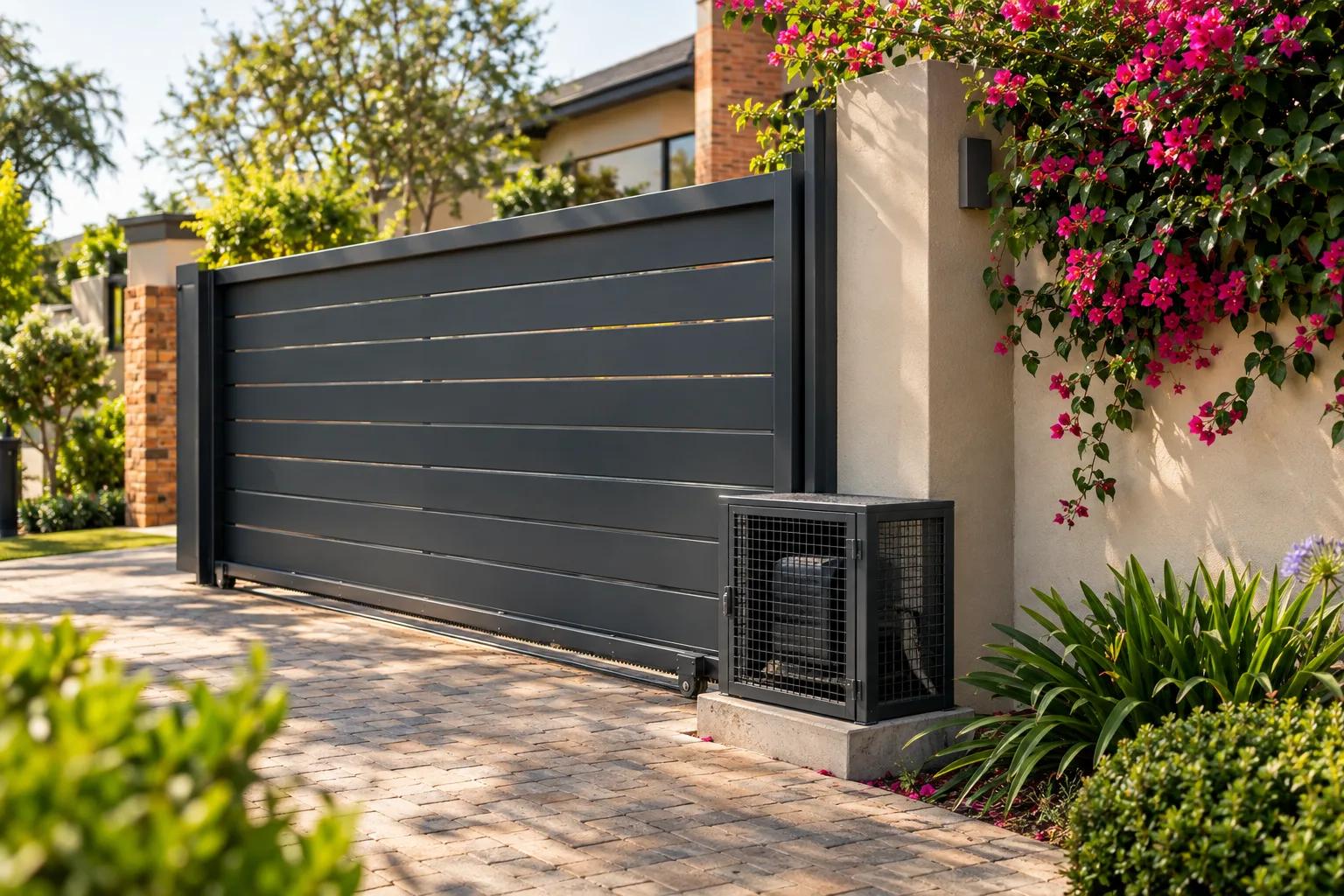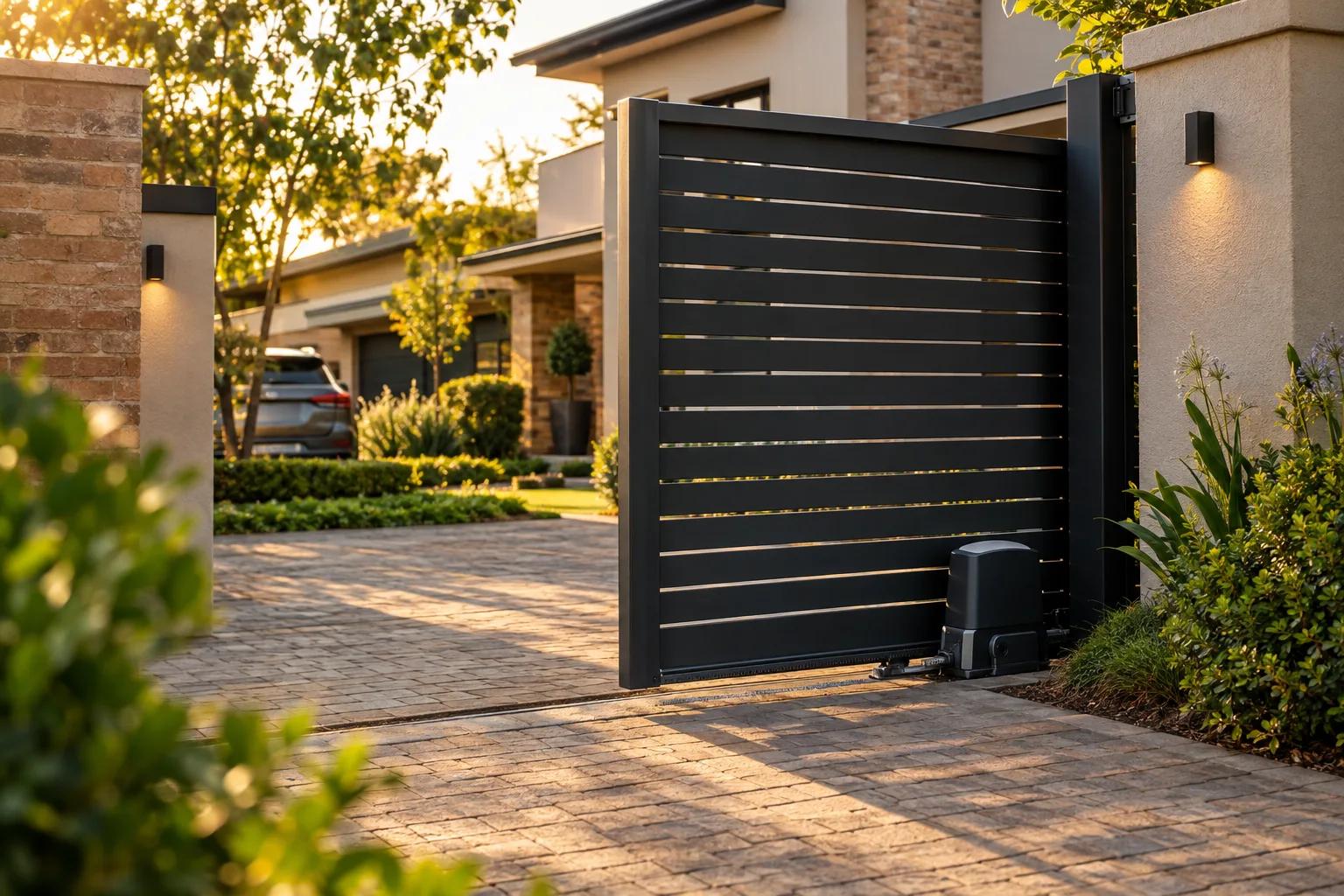
A sliding gate opening on its motor in front of a home

Gate automation

Gate automation for sliding and swing gates: gate motors, underground openers and boom gates, installed, serviced and maintained.

Send us a message

We use your details only to answer your enquiry. Privacy notice.

What is gate automation?

Gate automation means fitting a motor to a sliding or swing gate, so it opens and closes at the press of a remote, a keypad or an app. A gate motor runs on a battery charged from the mains, so it keeps working during a power cut. Safety beams stop the gate closing on a car or a person.

We install gate automation for sliding and swing gates at homes, estates and businesses. A light gate at a house and a heavy gate at a factory need different motors, so our accredited technicians and consultants specify the right product for your application on site.

Once it's installed, our service department maintains it, along with a wide range of other products, so wear is caught before the motor fails.

Sliding, swing and underground gate motors

The gate determines the motor. A sliding gate needs a motor strong enough to push its full weight along the track for years, while a swing gate needs one able to hold a heavy leaf steady in the wind.

Underground motors sit out of sight beneath a swing gate, for a cleaner look at the entrance. Busy business entrances often need a boom gate as well, so vehicles queue at the boom instead of in the street.

Boom gates and turnstiles →

What a good motor setup includes

A good setup keeps the gate working when the power fails and stops it closing on anyone in its path.

  • A motor sized for your gate and how often it opens
  • Remotes for the household, managed on the receiver so lost ones can be deleted
  • Multiple-user access for families, staff and tenants
  • Auxiliary gate alarms
  • Safety beams, so the gate stops for a car, a child or a dog
  • Battery backup, so the gate still opens when the power is off
  • Links to your intercom and access control
Garage door motors →

Old and lost remotes

Many households have a remote nobody can account for, along with remotes kept by a domestic worker who left or the builder who finished the kitchen. Every one of them still opens the gate until it is deleted from the receiver.

When we service your motor, we clear the remotes you no longer use, one of the simplest and cheapest security upgrades available.

Gate remote and motor security →

When the power goes off

A gate motor runs on its battery when the power goes off, and a healthy battery keeps the gate working normally through a power cut.

The gate opens fine in the morning, then runs out of power when you get home after dark, and you're left waiting in the street with the gate half open. A weak battery gives no warning, so we test it at every service and replace it before it lets you down.

Solar and battery backup →

What affects the cost of gate automation

Two gates can look alike from the street and cost quite different amounts to automate. One runs on a level track with power at the pillar; the other is heavy, sits on a slope and needs a trench for its cable.

  • The type of gate: sliding, swing or underground
  • The weight and length of the gate, which decide the size of the motor
  • The state of the track, wheels and hinges, because a motor can't save a dragging gate
  • Cabling and trenching from the power to the motor
  • Battery backup, sized for long power cuts
  • Remotes, safety beams, and links to your intercom or access control

Gate motors we install

We install, service and repair South African-made gate motors for sliding and swing gates, so spares and support are readily available when a motor needs a part.

We choose the motor to suit your gate, from a light pedestrian gate to a heavy driveway gate on a slope. Because we install one main make, it's also the one our service department knows best.

Case study: lighter gates and linear motors for a Sandton estate

In October 2026, we gave an estate entrance in Sandton new gates and new motors, and altered the walls around them, all in two weeks.

The old gates were heavy and the motors were an older set. Every opening was hard work for the motors, and hard work wears a motor out years early.

Weight was half the problem. The other half was geometry: the walls beside the gates left no room to mount new motors at the angle where they push best.

We replaced the gates with lighter, contemporary ones and hung them on industrial-specification hinges. We fitted Centurion Vantage 500 linear motors, then altered the walls beside them, so each motor pushes from its strongest angle.

The motors now move less steel, from a better angle, on every opening. Less strain means slower wear, so the estate gets more years from the motors before they need replacing.
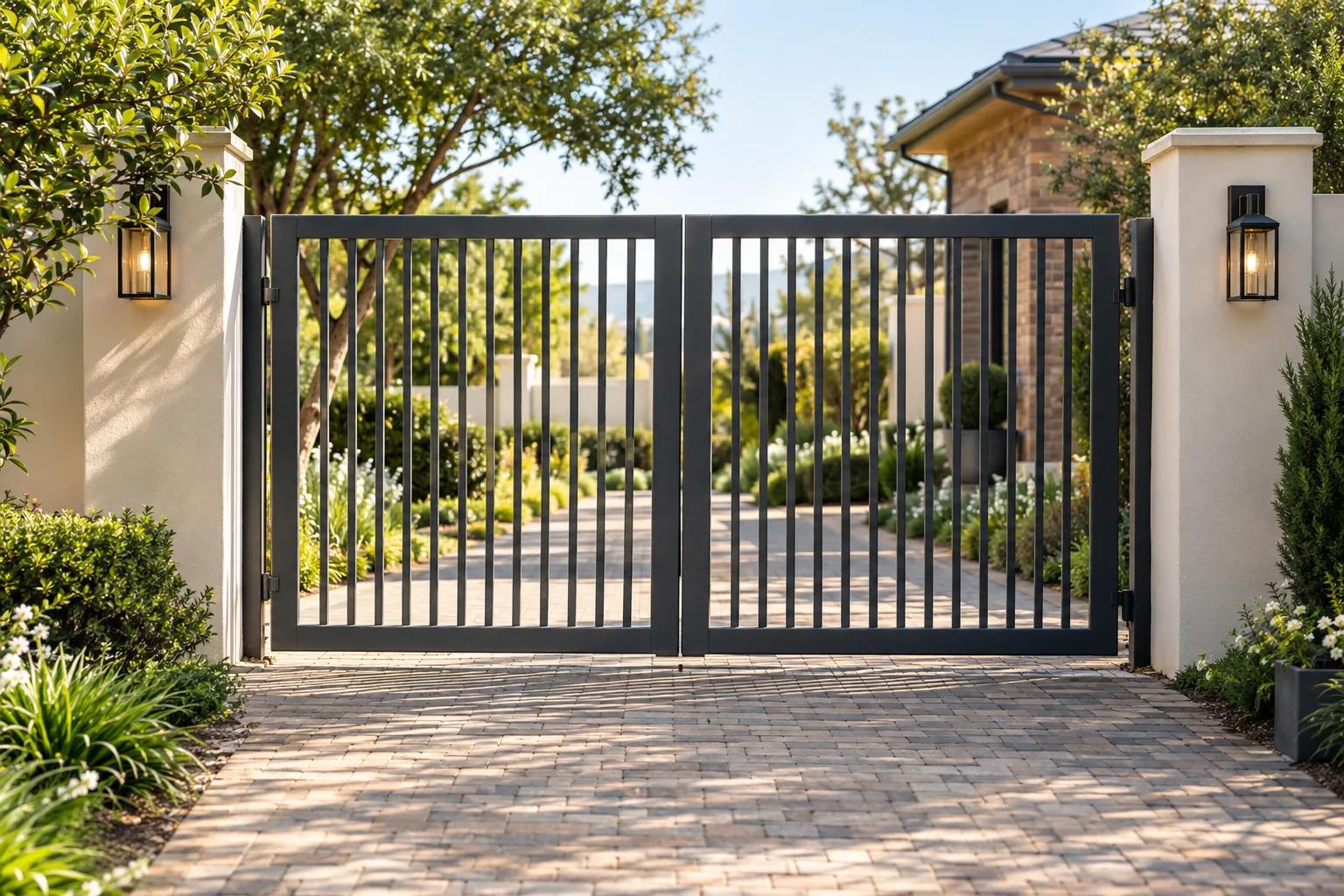
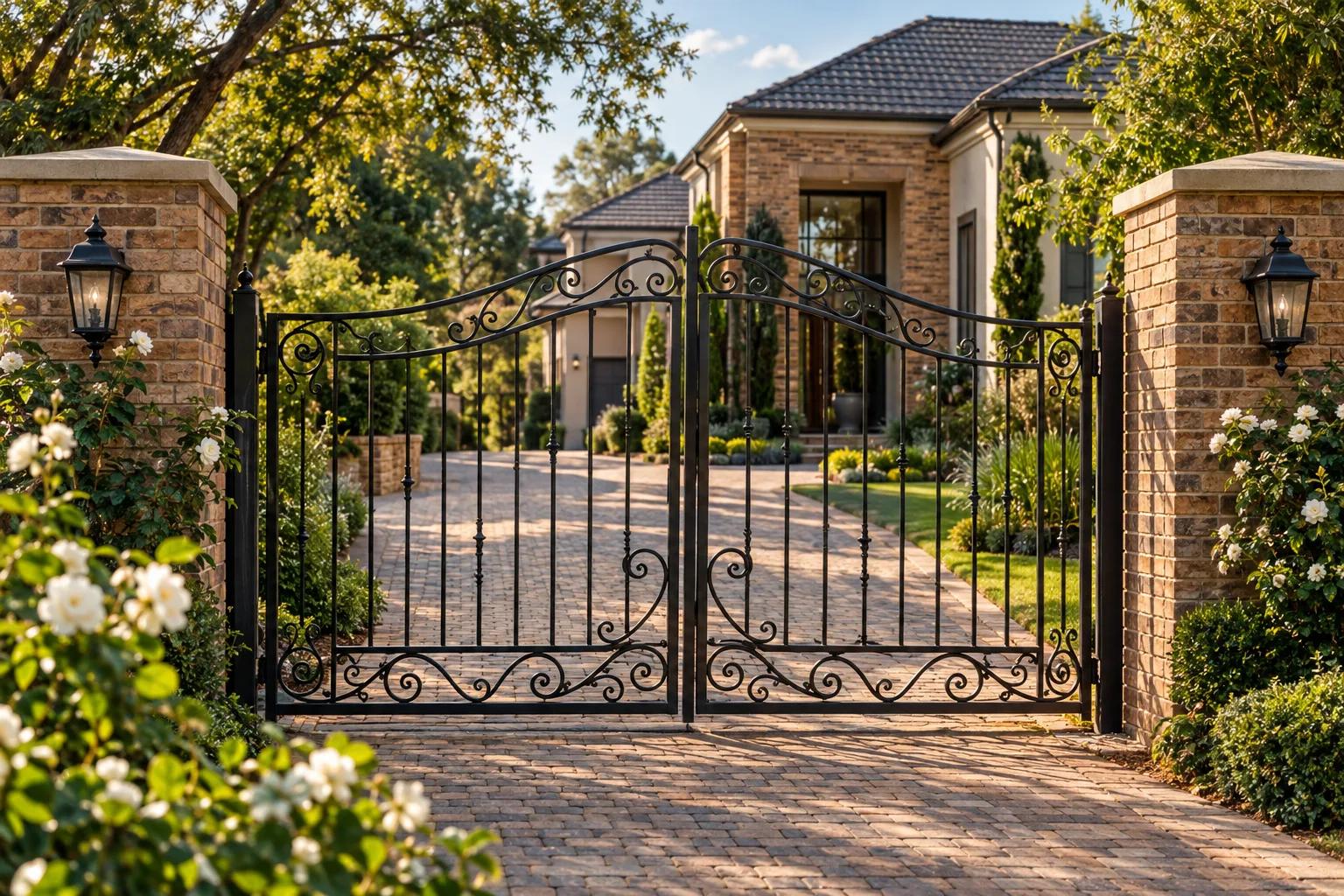
Watch the new gates open and close on their linear motors, filmed inside the estate (51 seconds, no sound).

Gate automation: our gallery

Frequently asked questions

How much does a gate motor cost to install?

The cost of installing a gate motor depends mainly on the gate. Its weight, length and type, sliding or swing, decide which motor it needs. A light sliding gate at a house needs a smaller motor than a heavy gate at a factory. The state of the track, wheels or hinges counts too, since a dragging gate must be fixed first. Cabling from the power supply, battery backup, safety beams, extra remotes and an anti-tamper cage all add to the price. Each one makes the setup safer or more reliable. We check the gate on site, then give you a written quotation listing every item before anything is ordered, so you can choose what to include.

Which gate motors do you install?

We install South African-made gate motors for sliding and swing gates, at homes, estates and businesses. Because the motors are made here, parts are close by and most repairs can be done quickly. We choose the motor to suit the gate: its weight, its length, the slope of the driveway and how many times a day it opens. Heavy industrial gates need larger motors, and swing gates often suit linear motors. A gate opening hundreds of times a day at an estate needs a motor rated for heavy use, while a home gate doesn't. We tell you what your motor can do and whether an upgrade would help, such as a rolling code receiver or an anti-tamper cage.

Does my gate work during load-shedding?

Yes, as long as the motor's battery is healthy. A gate motor runs on a battery charged from the mains, so when the power goes off, it keeps opening and closing as normal. A healthy battery can usually handle a long outage, depending on how often the gate is used. The problem is a battery no one has tested. Batteries fade over months without a sound, and frequent power cuts wear them out faster. A weak battery gets the gate through a short outage, then fails on a long one, often at 9:30pm with you waiting in the car. Have yours tested at a service before then. For busy gates and long outages, we can fit a bigger battery or a small solar panel to keep it charged.

Can you automate my existing gate?

Yes, in most cases. Before a motor goes on, we check the gate, the track or hinges, the wheels and the power supply. A gate must move freely by hand before it's automated. A dragging or sagging gate makes the motor work harder, so it wears out early and may stop altogether. Common fixes include replacing worn wheels, straightening a bent track, adding guide rollers or resetting hinges. We do this work ourselves, including welding in our workshop if needed. We also check whether there's power near the gate, or whether a cable needs to be run. We tell you exactly what the gate needs, which motor suits it and the extras we recommend, such as beams and battery backup.

Do you repair gate motors?

Yes. Our own service department repairs most makes of gate motor, including older motors already installed, along with their batteries, remotes, receivers and safety beams. We repair motors at homes, estates, complexes and businesses. Most faults give a warning first. A motor turns slower or noisier weeks before it stops, or the gate starts stopping short of the end. The most common causes are a flat battery, worn gears, a damaged gear rack (the toothed strip the motor drives along), misaligned beams or a faulty control board. Lightning and power surges damage boards too. We find the fault on site and fix it, often on the first visit. If a motor is too old to repair, we say so and quote for a replacement. Our gate and gate motor repairs page lists the common faults.

Talk to us about your home and business security needs

You shouldn't have to sit at the bottom of your own driveway, wondering whether the gate will close. With Paul's Gates you won't. Send us a message or chat on WhatsApp, and we will come and look.

Send a message